Compliance
Over the last couple of years we have noticed a substantial uptick in HMRC scams, attempting to defraud clients out of their hard earned money. These scams can be delivered via phone, post, text message or email. So we have decided to write a helpful guide to show you how to spot HMRC scams and protect yourself.
Useful Points
Always check the true destination of any web links
Be wary of random offers of money
HMRC will not use social media (Instagram, Facebook, WhatsApp) to get in direct contact with you
HMRC will not ask for any personal information via text
If anything seems off, contact us as your accountant or HMRC directly through any of the verified channels
Types of HMRC Scam
1. Phishing
Phishing is a common type of scam, whereby the scammer sends an email or text message branded as HMRC. They will include a link to a website which has nothing to do with HMRC, but is designed to fool you into thinking that it is HMRC's website. Once you're on the website the scammers will either attempt to gain money or personal information from you.
To avoid this, always check the links that you click and where those links lead.
2. Spear Phishing
This is a type of phishing scam, but even more sophisticated. These scams occur when the scammers have identifiable information about you. They may obtain this information from hacking computer systems or data leaks. The scammers will tailor each scam attempt, possibly to identify you by name in a bid to make the scam seem more legitimate.
At Maximoor, we protect against this by maintaining robust computer systems and making consistent use of encryption technology.
3. Threats
These scams involve a direct threat, often of prison sentences or hefty fines. Scammers, usually based abroad, will make phone calls posing as HMRC or the police and demand immediate payment over the phone. Whilst these scams are typically quite easy to spot, they prey on the most vulnerable.
4. Unregistered Agents
Perhaps the most unfortunate of all are scams where the scammer poses as an agent or accountant. In these examples, the scammer portrays themselves to be a trustworthy business. They use your information to make legitimate claims to HMRC and then disappear whilst holding onto your money.
To avoid this, do research on the company you select to help manage your tax affairs. Learn more about Maximoor here.
Real Examples Of HMRC Scams
Here are some actual examples of HMRC scams received by our clients and even members of our team.
Text Messages
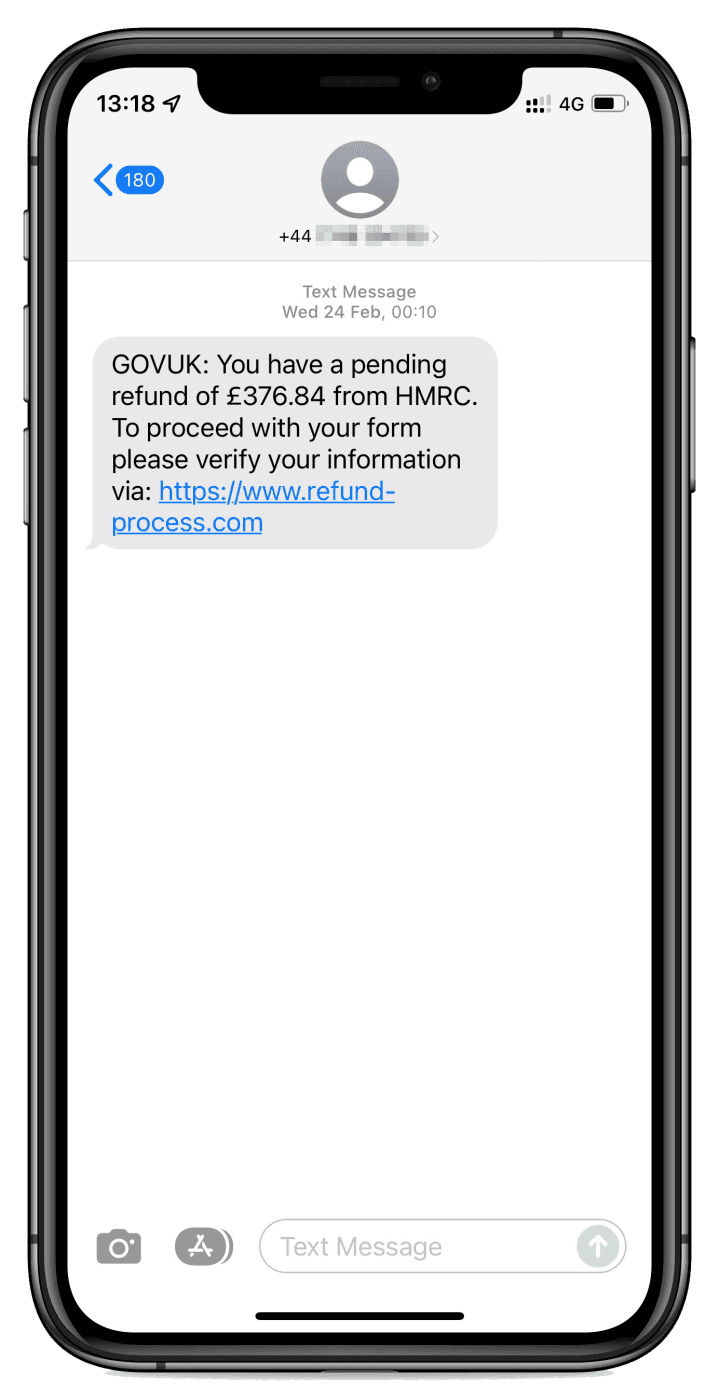 | 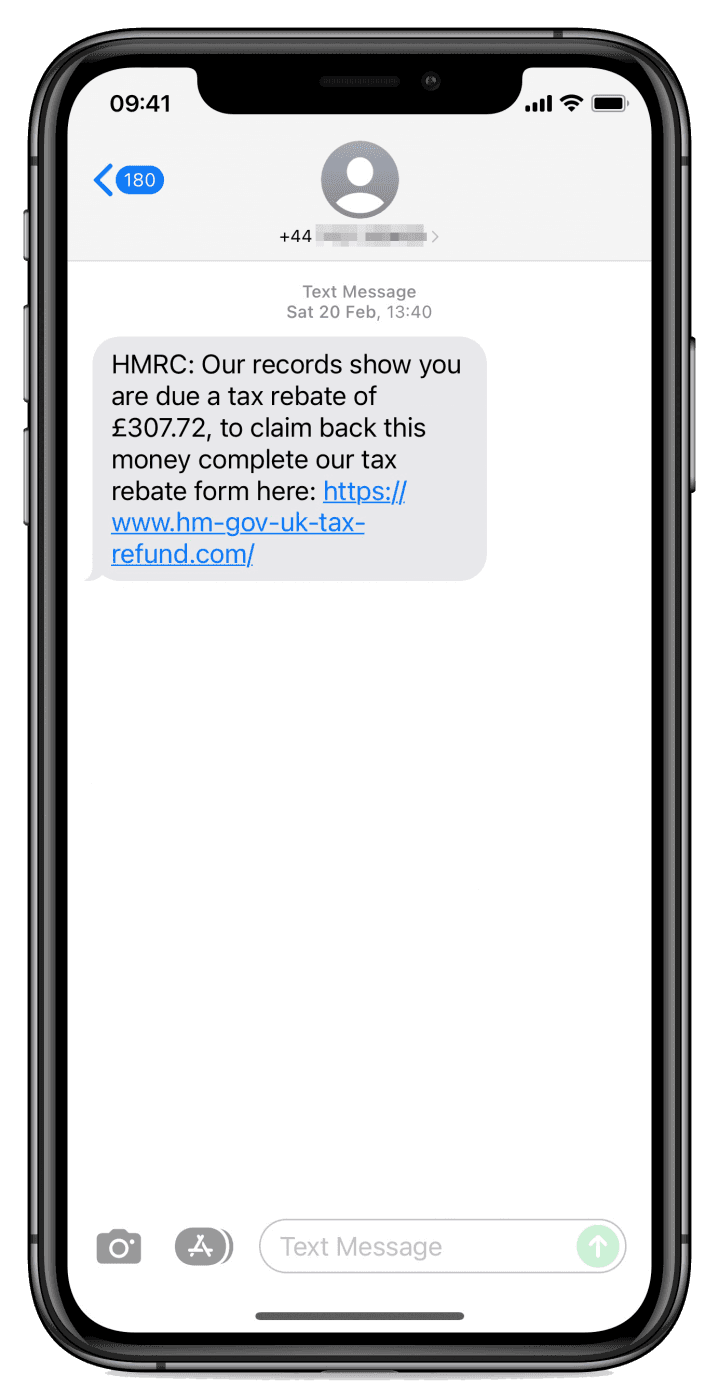 |
In these examples, the scammers are attempting to entice you with the offer of a tax refund. If you click the links (which have now been taken down) you would be invited to give away your personal information to the scammers.
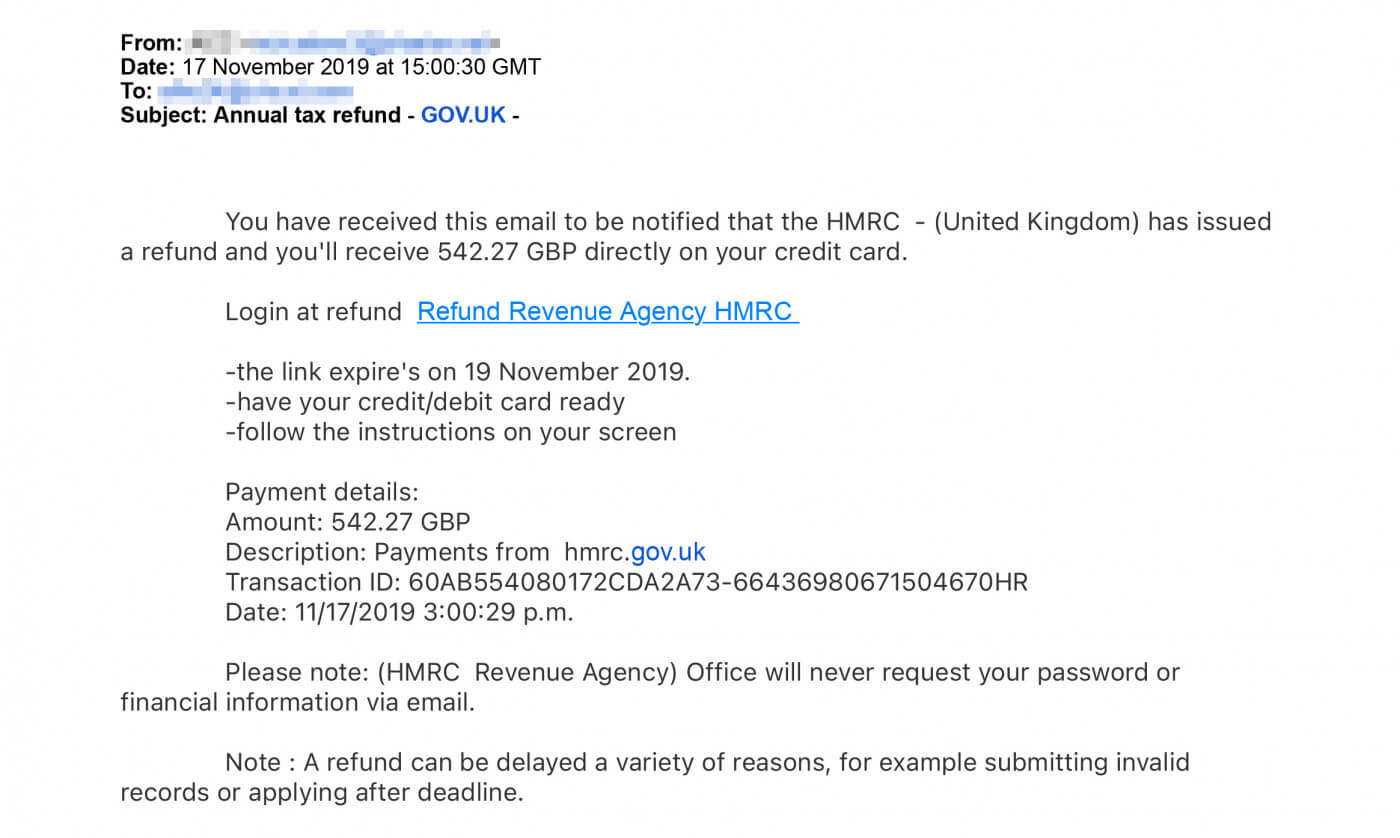
In this example, if you click the link your bank card details are requested and if you were to enter the details from your bank card instead of receiving money, your bank account would be drained. You may have noticed the time pressure added by scammers by inserting a 48 hour deadline.
What To Do If You Think Something Is a Scam
If you are a client of ours you will benefit from free year-round HMRC support. You can forward anything HMRC related directly to us, for us to deal with. We will confirm whether any communication is a scam or genuine. If we confirm the communication is a HMRC scam, we can then make the report to HMRC to protect other taxpayers.
For those you who are not clients, HMRC have a webpage dedicated to HMRC scams and making reports. We cover this below.
What HMRC Have To Say
HMRC are aware of the problem. Below we have repeated guidance we received from HMRC earlier in the year.
"We are aware of recent increases in scams via phone calls, emails and texts. If someone contacts you or your employees unexpectedly claiming to be from HMRC – possibly saying that you owe tax and face arrest, are due a tax refund, that your National Insurance number has been compromised or asking you to transfer money or give bank details – it’s likely to be a scam.
Search GOV.UK for our 'scams checklist' and to find out how to report tax scams. You can also access the National Cyber Security Centre’s new guide on how to stay secure online and protect yourself or your business against cybercrime by searching 'Cyber Aware'."
The scale of the problem is huge. Numbers have been released which show that in March 2018 alone HMRC received 84,549 phishing reports and requested that 2,672 phishing websites be taken down. In the 2018 tax year, HMRC received 771,227 customer phishing email and SMS referrals.
How to Report A Possible Scam
If you spot a HMRC scam and would like to report it directly to HMRC, do the following
Forward suspicious emails claiming to be from HMRC to phishing@hmrc.gsi.gov.uk
Forward texts to 60599
If you have fallen victim to a scam and lost money as a result, you should report it to Action Fraud. Action Fraud is the UK’s national reporting centre for fraud and cybercrime. It is run by the City of London Police and the National Fraud Intelligence Bureau.
As mentioned above, if you are a client of our's and think you have come across a HMRC related scam, we will deal with this under our free Year-Round HMRC Support that comes with all of our services. Just forward us the communication and we will sort everything out.
Trustworthy Information
For details on the Fifth SEISS Grant and Getting Your 2021 Tax Refund, check out our blog.

About Maximoor
Compliance
Late tax returns mean penalties from HMRC — and they add up fast. Here's what happens if you miss the deadline and how to avoid the fines.
Read More
Tax Tips
Can you claim tax relief on food and meals? We break down the rules for construction workers and tradespeople — what qualifies and what doesn't.
Read More
Compliance
HMRC scams are increasingly common. Learn how to spot fake texts, emails, and phone calls from fraudsters pretending to be the taxman.
Read More