Tax Tips
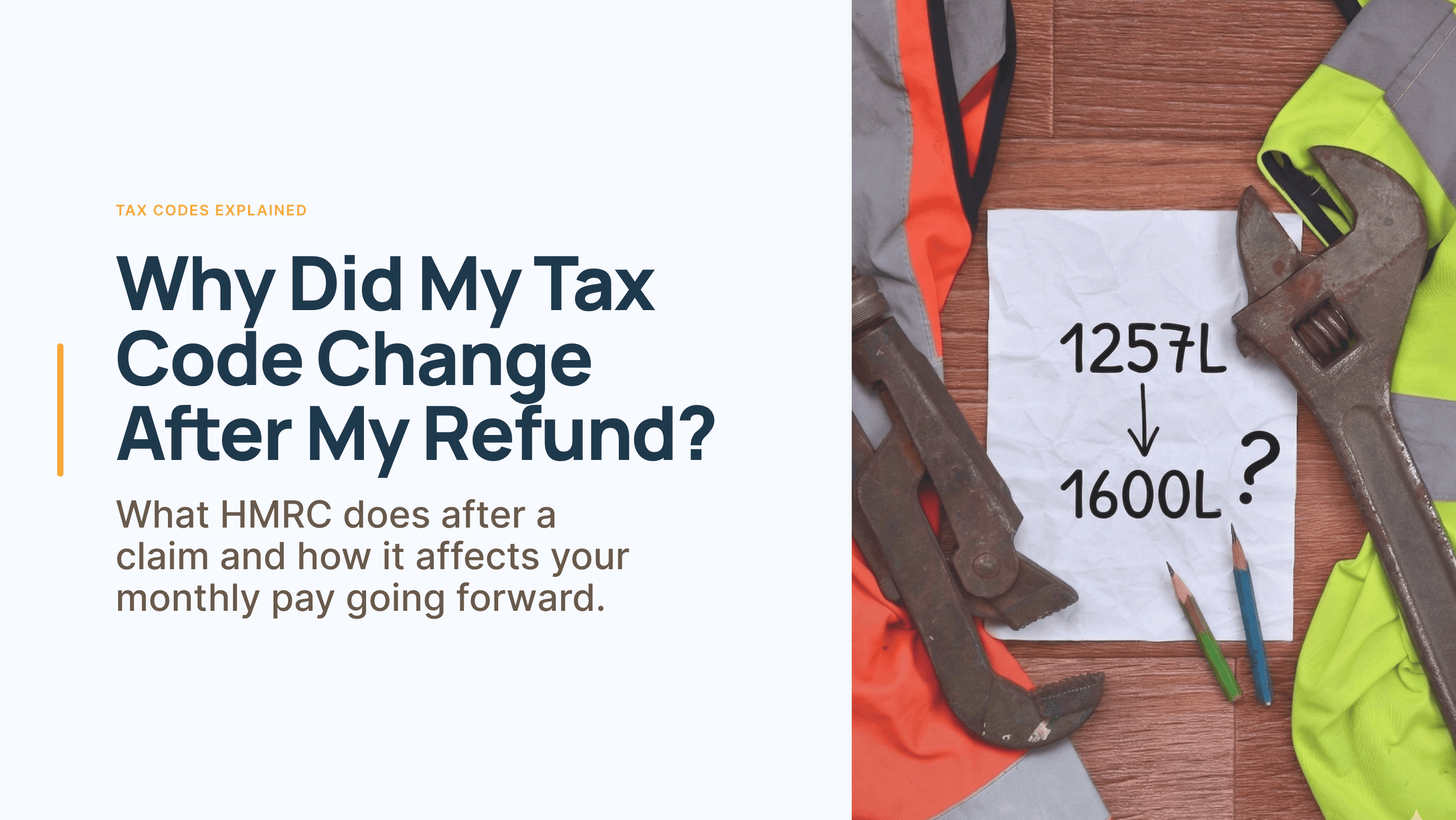
If you've claimed a tax refund and noticed your tax code has changed afterwards, you're not alone. It's one of the more common things we get asked about. The good news is that in most cases, the change is working in your favour.
Here's what's happening and why.
What Is a Tax Code?
The standard tax code is 1257L, this applies to most people in standard employment. Your tax code is set by HMRC and given to your employer, who uses it to work out how much tax to deduct from your wages each payday. You'll see it on your payslip, and HMRC will also notify you of any changes directly.
The number reflects what is known as your tax-free allowance. This is the amount you can receive before tax applies, made up of your personal allowance and any other entitlements HMRC has recognised. The higher the number, the less tax gets deducted each month.
Why Does Getting a Tax Refund Change Things?
For employed workers, a tax refund is often the result of work-related expenses that weren't accounted for at the time tax was deducted. Things like travel to temporary workplaces, tools, PPE, or uniform costs. When you claim a refund on this basis, HMRC repays the tax you overpaid on those costs.
Once HMRC learn that you've been spending money on work-related expenses, they may adjust your tax code to reflect that going forward. Rather than you continuing to overpay tax each payday and waiting for a tax refund at the end of the tax year, your employer deducts less tax on each payday instead.
What Does That Mean for Your Pay?
Your monthly take-home increases because your employer is deducting less tax at source. You won't receive a lump sum refund each year in the same way, but you'll see the benefit spread across your payslips instead.
The thing to be aware of is that the adjusted code is based on HMRC's expectation of your ongoing expenses. If your circumstances change and your actual expenses turn out to be lower than what HMRC has built into your code, you may underpay tax across the year. HMRC will pick this up when your return is submitted and will typically collect any shortfall by adjusting your code the following year rather than issuing a bill directly.
What If Your Expenses Aren't Consistent Year to Year?
If you're not certain that your expenses will remain at a similar level each year, reverting to the standard tax code is usually the safer option. It means you pay the same amount of tax as everyone else throughout the year, without the risk of finding yourself out of sync with what HMRC expects. If your circumstances do allow for a claim, you can always make one at the end of the tax year and receive any refund you're owed at that point.
Can You Go Back to the Standard Code?
Usually, yes. If you'd prefer to revert to the standard code, you can request this from HMRC and they typically agree. For most people whose expenses aren't fixed, this is the approach we'd recommend. It keeps things straightforward and means there are no surprises at the end of the year.
Tax code changes after a refund are usually a sign that the system is working as it should. But they're not always explained clearly, and that's where the frustration tends to come from. If your code has shifted and you're not sure what it means, get in touch and we'll talk you through it.
Not sure about your tax code? Contact Us Here

About Maximoor
Compliance
Late tax returns mean penalties from HMRC — and they add up fast. Here's what happens if you miss the deadline and how to avoid the fines.
Read More
Tax Tips
Can you claim tax relief on food and meals? We break down the rules for construction workers and tradespeople — what qualifies and what doesn't.
Read More
Compliance
HMRC scams are increasingly common. Learn how to spot fake texts, emails, and phone calls from fraudsters pretending to be the taxman.
Read More